
Metallurgy for the Non-engineer
BY RUSSELL SHERMAN, PE
Manufacturing
14. What are the metallurgical ramifications of "cold heading" vs. "hot heading"?
Cold heading is a more efficient process and allows the part to be cold worked. The temperatures used for hot forging will reduce the effect of work hardening. This is important for metals which derive much of their strength from the cold work. Cold heading produces a better product than hot heading. The number and force of the blows of the cold heading machine can make a significant difference in the quality of the end product. Excessive numbers of blows can lead to voids in the bolt head. ARP, in fact, holds significant patents on cold heading procedures for the higher nickel and cobalt based alloys.
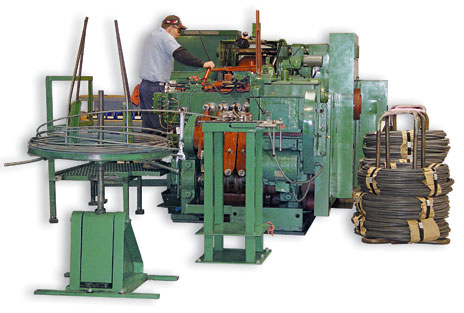
Our patented process begins with a softer wire that can be cold forged. The process work hardens the head and the under head area to the desired hardness. We then power extrude the front end to achieve the reduction and hardness in the shank resulting in a bolt with even strength and hardness from end to end.
In a typical aerospace manufacturing process, these alloys are hot headed from bars, reduced in diameter from 48 to 50% by cold drawing, resulting in a hardness of about Rockwell C46 which is too hard for cold heading. So, the blanks are locally induction heated in a very narrow temperature envelope and hot headed. The process reduces the hardness immediately in the area under the head approximately 3 to 5 points on the Rockwell C scale. Subsequent heat treatment does not restore this partially annealed area to full hardness and strength. The final result is a relatively soft-headed bolt. Therefore, this process is not used by ARP.
15. What is the difference between the usage of "bar" material vs. "wire"?
Bars produced by the mill in straight sections are normally shipped in 12 foot lengths. Wire is supplied in continuous coil form and is hundreds of feet in length. Bars are cut to length and the bolts are hot forged from these lengths. Wire on the other hand is fed into a cold header in a continuous manner.
17. Define "Power Dump."
This is a term used to define the heavy extrusion of the fastener body during forging. The part is forced into a die much smaller than the blank thereby causing a severe reduction in cross section area. This reduction of the cross sectional area is accompanied by an increase in length because metals can't be compressed. However, power dumping or reduction, delivers a significant increase in strength properties and is part of the patented process we use to produce fasteners from 304 stainless steel with 170,000 psi UTS and AMS 5844 (ARP 3.5) with ultimate tensile strengths in the 270,000 psi UTS range with outstanding fatigue.